Structural and Postural Correction in a Young Adult with Kyphoscoliosis
A young adult with kyphoscoliosis pursued care for posture and structural correction rather than pain. Comparative posture analysis and follow-up X-rays documented measurable changes in spinal alignment following individualized mirror-image corrective care.
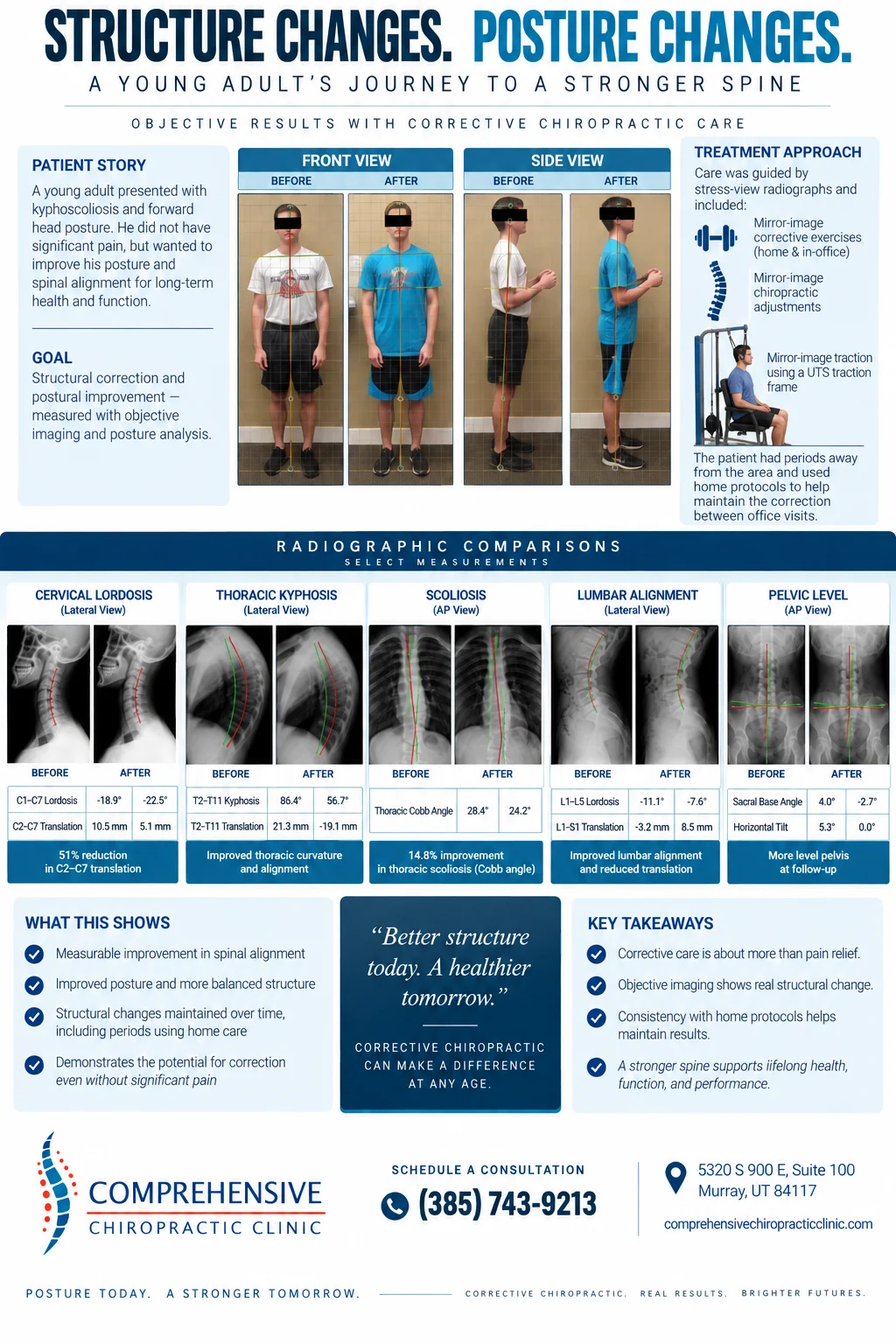
Comparative posture photographs and radiographs. Individual results vary, and this case does not guarantee that another patient will experience the same outcome.
Initial Presentation
This young adult presented without significant pain. His primary concern was posture and abnormal spinal alignment associated with kyphoscoliosis. Because symptom reduction was not the primary objective, progress was evaluated using posture analysis and comparative radiographic measurements rather than pain scores alone.
Clinical Findings
- Thoracic scoliosis measured by a Cobb angle of approximately 28.4°
- Increased thoracic kyphosis and altered thoracic sagittal alignment
- Cervical alignment changes, including approximately 10.5 mm of C2–T4 translation
- Lumbar, pelvic, and full-body postural imbalance
The Corrective Strategy
Corrective care was individualized using stress-view radiographs to help determine appropriate correction vectors. The program incorporated mirror-image corrective exercises, mirror-image chiropractic adjustments, mirror-image spinal traction using a seated UTS traction frame, and prescribed home corrective exercises and maintenance protocols. The patient was not continuously receiving in-office care throughout the entire comparison period; during extended periods away from the area, he used prescribed home protocols to help maintain changes achieved during periods of active care.
Objective Outcomes
- Thoracic Cobb angle changed from approximately 28.4° to 24.2°, a 14.8% improvement in the measured thoracic scoliosis angle
- Cervical C2–T4 translation decreased from approximately 10.5 mm to 5.1 mm
- Comparative imaging documented changes in thoracic sagittal alignment and translation
- Follow-up measurements documented changes in lumbar and pelvic alignment
- Standing posture photographs showed visible changes in postural alignment
- Individual measurements did not all normalize; these comparisons document objective structural change rather than complete correction
Key Takeaway
This case is notable because the patient was not seeking care primarily for pain relief. The treatment objective was measurable improvement in posture and spinal alignment. Comparative posture analysis and radiographic measurements provided objective ways to evaluate structural change over time.
Individual results vary. This case is presented for educational purposes and does not guarantee that another patient will experience the same outcome.